Every Word Is Being Recorded: Why You Must Never Discuss Your Case on a Jail Phone
The moment you pick up a jail phone, assume a prosecutor is on the other end of the line.
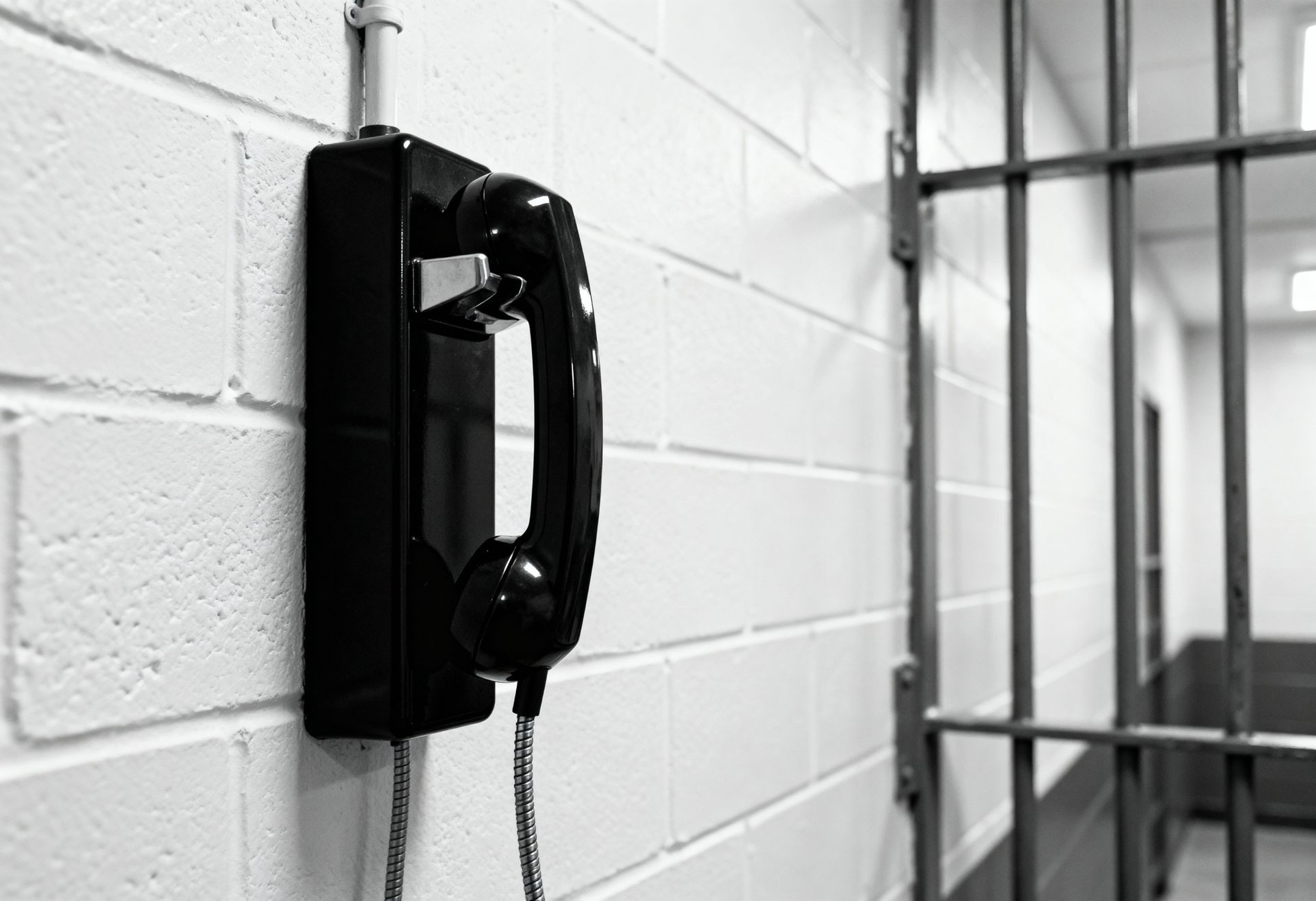
It happens in virtually every criminal case involving a detained defendant. A person is arrested, booked into the Harris County Jail or another facility, and within hours they pick up the phone. They want to hear a familiar voice. They want to explain what happened. They want to reassure their family. They want to vent.
And in doing so, they hand prosecutors some of the most damaging evidence imaginable — in their own voice, in their own words.
At the Parrish Law Firm, we tell every client the same thing from the moment we are retained: do not discuss your case on the jail phone. Not with your mother. Not with your best friend. Not with anyone who is not your attorney. This article explains exactly why that rule exists, how jail phone systems work, what law enforcement can do with those recordings, and why attempts to work around the surveillance never succeed.
1. There Is No Privacy on a Jail Phone — Period
Let’s start with the most important fact: you have no constitutional right to privacy on a jail telephone call. None. This is not a gray area in the law.
The Fourth Amendment protects against unreasonable searches and seizures, but courts have consistently held that incarcerated individuals have a severely diminished expectation of privacy. When you use a jail phone, you are notified — typically by a recorded message that plays before every single call — that the call is subject to monitoring and recording. That notice is legally significant. By proceeding with the call after hearing it, courts have held that you have consented to the recording.
The United States Supreme Court and federal circuit courts have repeatedly affirmed that recorded jail calls do not violate the Fourth Amendment. Texas state courts follow the same principle. Prosecutors do not need a warrant to listen to your jail calls. They do not need to show probable cause. They simply request the recordings from the jail or the phone service provider — and they get them.
⚠️ The Legal Reality
- You have no expectation of privacy on a jail phone call.
- Every call (except attorney-client calls) is recorded automatically.
- Prosecutors can obtain those recordings without a warrant.
- The recorded warning you hear before each call constitutes legal consent to monitoring.
- This applies regardless of who you are calling or what you are discussing.
2. How Securus Technologies Works — and Why It Matters
Most county jails in Texas — including facilities throughout the Houston and Harris County area — use Securus Technologies as their inmate telephone service provider. Understanding how Securus works is essential to understanding just how exposed your communications are.
What Securus Is
Securus Technologies is one of the largest prison and jail telecommunications companies in the United States, providing phone and communications services to correctional facilities across the country. When you make a call from a Harris County Jail phone, that call is routed through the Securus system.
Automatic Recording of Every Call
Every outgoing call made through the Securus system — with the exception of calls to registered attorney lines — is automatically recorded in its entirety. This is not selective. It is not triggered by suspicion. Every call, every time, is captured and stored.
Securus maintains a searchable database of these recordings. They are tagged by inmate name, inmate ID number, date, time, duration, and the phone number called. Law enforcement and prosecutors can access this database directly, search for calls associated with a particular case or defendant, and pull recordings with minimal friction.
The Investigator Tools Platform
Securus provides law enforcement agencies with a proprietary software platform called Investigator Tools (also marketed under names like THREADS and related products). This platform gives investigators direct, on-demand access to jail call recordings. Features include:
- Keyword searching across call transcripts — investigators can search for names, locations, specific words or phrases across all recorded calls associated with a defendant.
- Voice biometric analysis — the system can identify a speaker’s voice across multiple calls, even if they are using different phone accounts or calling from different phones.
- Call mapping and network analysis — the system can map relationships between callers, identifying who communicates with whom and how frequently.
- Automated alerts — investigators can set keyword triggers so they are automatically notified when a specific word or phrase is spoken on a monitored line.
- Real-time monitoring — in some configurations, law enforcement can listen to calls live as they happen.
This is not a passive system where someone occasionally listens to a recording. It is a sophisticated surveillance infrastructure designed specifically to help prosecutors build cases against incarcerated defendants.
How Prosecutors Request and Use Recordings
The process for a prosecutor or detective to obtain jail call recordings is straightforward. In most cases, they submit a simple records request to the jail or directly access the Securus platform if their agency has a law enforcement account. No warrant is required because, again, you have already consented to recording by using the phone. The recordings are typically produced quickly and can be downloaded as audio files, which are then reviewed, excerpted, and prepared as evidence.
Transcripts can be generated — either automatically through voice-to-text software or manually by investigators or paralegals — and submitted alongside the audio recordings as exhibits at trial.
3. How Jail Call Recordings Are Used Against Defendants
The ways in which recorded jail calls can damage a criminal case are wide-ranging. Here are the most common scenarios we see as defense attorneys.
Admissions and Confessions
The most obvious danger is saying something that amounts to an admission of guilt. This happens more often than you might expect. Defendants tell family members what “really happened.” They explain why they did something. They apologize to victims or their families. They describe their involvement in events in ways that directly contradict their planned defense. All of it goes into evidence.
Contradicting Your Defense
Even without a direct admission, jail calls routinely produce statements that undermine a defendant’s legal strategy. If your defense is self-defense but you tell a friend on the phone that you “wanted to hurt” the alleged victim, that statement will be used. If you claim you were not present at a location but you describe details of the scene that only a witness could know, that will be used. Inconsistencies between what you say on jail calls and what your attorney argues in court are devastating.
Witness Tampering and Obstruction
Defendants frequently use jail calls to try to influence witnesses — asking family members to contact a victim, coaching a potential witness on what to say, asking someone to retrieve or destroy evidence, or pressuring people not to cooperate with investigators. These calls result not only in additional criminal charges (witness tampering, obstruction of justice, retaliation) but also demonstrate consciousness of guilt that prosecutors use to devastating effect at trial.
Identifying Co-Defendants and Associates
Jail calls are a goldmine for investigators trying to build cases against multiple defendants. Conversations that mention names, locations, or details about others involved in an alleged offense can be used to identify, locate, and charge co-conspirators — and can be used against those individuals in their own prosecutions.
Undermining Bail and Bond Arguments
If you are arguing for a reduced bond or release on personal recognizance, prosecutors routinely review jail calls for statements that indicate you are a flight risk, a danger to the community, or unlikely to comply with conditions of release. A recorded call where you discuss leaving the state, express hostility toward a victim, or describe ongoing criminal activity can effectively kill any chance of a favorable bond ruling.
Sentencing Impact
Even if jail calls do not affect the outcome of your trial, they can be devastating at sentencing. Calls that show a lack of remorse, contempt for the legal process, continued involvement in criminal activity, or disregard for victims will be presented to the judge. Judges take this seriously.
4. Why Attempts to Outsmart the System Never Work
Over the years, defendants have tried countless methods to disguise their conversations or avoid surveillance on jail phones. Without exception, these strategies fail — and often make things significantly worse.
Using Code Words or Slang
Some defendants believe that by using code words, nicknames, or slang they can discuss their case without investigators understanding what is being said. This does not work. Experienced investigators are trained to recognize coded language and have extensive experience decoding it. Moreover, the context of the conversation, the identity of the parties, and surrounding statements almost always make the meaning clear. Attempting to use code language can itself be introduced as evidence of consciousness of guilt — an awareness that what is being discussed is incriminating.
Having Someone Else Make the Call
Some defendants ask family members or friends to call on their behalf or to act as intermediaries in conversations. This does not protect the communication. The Securus system records the call regardless of who initiates it. Voice biometric tools can identify the incarcerated person’s voice even if they are not the primary speaker. And the individuals facilitating these communications may expose themselves to charges of obstruction or conspiracy.
Calling from Another Inmate’s Account
Defendants sometimes use another inmate’s phone account or PIN to make calls, believing this disguises their identity. Securus’s voice biometric technology is specifically designed to defeat this tactic. The system can match a speaker’s voice to their biometric profile across calls made from any account. Additionally, using another inmate’s account without authorization may constitute a separate rules violation or even a criminal offense.
Speaking in a Foreign Language
Law enforcement agencies have access to translation and interpretation resources. Calls in Spanish, Vietnamese, Mandarin, Arabic, and virtually any other language can be and are translated. Speaking a language other than English does not provide any meaningful protection.
Whispering or Speaking Quietly
Jail phone recordings capture audio clearly regardless of speaking volume. Whispering does not defeat the recording system.
Trying to Signal or Hint Without Saying the Words
Some defendants try to communicate through implication — saying things like “you know what to do” or “make sure everything is taken care of.” These vague statements do not provide legal protection. When placed in context — combined with the surrounding conversation, the identity of the parties, the timing relative to the case, and other evidence — they are often sufficient for prosecutors to establish intent and meaning. Vagueness is not a shield.
⚠️ The Bottom Line on Workarounds
- Code words and slang are recognized and decoded by experienced investigators.
- Voice biometrics identify your voice even when using another inmate’s account.
- Foreign language calls can be translated by law enforcement.
- Asking others to act as intermediaries puts them at legal risk too.
- Vague or implied statements still provide evidence of intent.
- Every workaround attempt can itself be introduced as evidence of guilt.
5. The Attorney-Client Exception — and Its Limits
There is one category of jail calls that is protected: calls between an incarcerated defendant and their attorney. Attorney-client communications are privileged, and jails are required to designate attorney phone lines as exempt from recording.
However, this protection has important limitations that defendants must understand.
- The attorney’s phone number must be registered with the jail as a privileged attorney line. If you call your attorney on an unregistered number, the call may be recorded.
- If a third party — a family member, friend, or anyone other than your attorney — is on the call, the privilege may be waived for that portion of the conversation.
- Calls made through a third party (“three-way calls”) to reach your attorney are not protected. The introduction of any non-privileged party destroys the privilege.
- Do not call your attorney through jail phone systems if you are unsure whether their number is registered. Ask your attorney for guidance on the safest way to communicate.
The attorney-client privilege exists to protect the confidentiality of your legal strategy. Guard it carefully. Never discuss your case in a way that could introduce a third party into what should be a privileged conversation.
6. What You Should and Should Not Say on Jail Calls
The rule is simple: do not discuss your case. At all. Under any circumstances. Not the facts. Not what happened. Not what witnesses might say. Not what evidence exists. Not your defense strategy. Not what you want your family to do on your behalf in relation to the case. Nothing.
Here is a practical guide to safe and unsafe topics on jail calls:
Safe to Discuss
- Personal matters unrelated to your case — family updates, health, emotional support.
- Logistical needs — money on your books, commissary, clothing or personal items to bring to court.
- Contact information — letting family know how to reach your attorney or what the attorney’s name is (but not what the attorney has told you).
- Court dates — telling family when your next court setting is scheduled.
Never Discuss — Regardless of How You Phrase It
- What happened on the day of the alleged offense.
- Where you were, who you were with, or what you saw.
- Any witnesses — their names, what they know, or what you want them to say.
- Any physical evidence — where it is, what it shows, or what should happen to it.
- Your defense strategy or anything your attorney has told you.
- Other people who may be involved in the case.
- Your feelings about the alleged victim, the police, the prosecutor, or the judge.
- Any frustration, anger, or desire for retribution of any kind.
7. Instructing Your Family and Friends
One of the most overlooked risks is that family members and friends — who are trying to help — inadvertently make things worse. They may ask questions about the case on recorded calls without realizing the implications. They may volunteer information. They may take actions at a defendant’s request that constitute obstruction.
If you are incarcerated, make sure the people you trust most understand the following:
- Every call is recorded. They should assume everything said will be heard by prosecutors.
- They should not ask you what happened or encourage you to explain the situation.
- They should not contact alleged victims, witnesses, or co-defendants on your behalf unless your attorney has specifically authorized it.
- They should not retrieve, move, or destroy any property or evidence at your request.
- If they have questions about what they can and cannot do to help, they should contact your attorney — not you — for guidance.
Well-meaning family members who act without legal guidance can inadvertently expose themselves to criminal liability and create evidence that damages your case. The safest approach is to direct all case-related questions and actions through your attorney.
You Have the Right to Remain Silent. Use It.
The jail phone is one of the most powerful investigative tools prosecutors have — and one of the most common ways defendants inadvertently destroy their own cases. The rules are simple: say nothing about your case on the jail phone, and make sure the people who love you understand why.
If you or a family member is currently incarcerated and facing criminal charges in the Houston area, contact the Parrish Law Firm immediately. We will advise you and your family on how to communicate safely, protect your rights, and build the strongest possible defense.
Call us at
(281) 619-4191 or email
Damon@ParrishDefense.com for a confidential consultation. We are available when you need us most.